Shapeshift
reflections on re-membering, collective singing and social justice

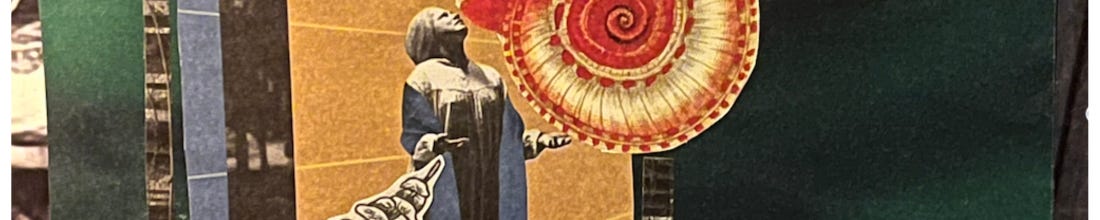
A tiny song from my spirit to yours:
You lay down, your outer work done for a spell. You get comfortable, nestling your back body against the earth, your eyes losing focus or closing, gradually finding freedom from the doing, from expectation. You are head to head with the others, new and old friends, just being. Together, receiving.
Or: you are standing or sitting shoulder to shoulder around the ones resting on the floor, trusting in the energy of your individual and collective offering, even though you don’t know yet what will emerge.
The air, already scattered with a soundscape of birds, rustling leaves, people shifting in their places. Then someone adds a vocal riff. Soon others trickle in. Melodies, harmonies, beats and human made soundscapes fill the space. A song forms, alternating between a little messy and wild, hesitant and soft, bold and courageous, coming together and falling apart. Everyone, giving and/or receiving, deep in an individual and collective experiences of emergent resonance.
You practice listening deeply, allowing sounds and spirit to move through you in real time. Harmonies swell into satisfying fullness, then fade away just as quickly. Trust in the process keeps the collective song moving, through commitment, love, iteration and adaptation. Eventually everyone lets go, bringing the creation to a natural close.
This is Shapeshift, an exercise in the Vocal River improvisation method created by Rhiannon - a long-time improviser who I’d wanted to study with since she sang with Bobby McFerrin. I finally gave myself the opportunity this July for the session led by the dynamic trio Cara Trezise, Laurel Murphy and Roy Willey.
Do You Remember How to Sing?
When I was young, I wanted to be a singer. In spite of performance anxiety that would visit often I was often singing - bedroom concerts with Al Jareau; family car rides with the Spinners, Kenny Rogers and The Muppets; every school choir and then a college acapella group; private and group jazz improvisation lessons. I chose my college to minor in music, but pivoted away, prioritizing a growing commitment to supporting grassroots women of color organizing. The longing to sing never stopped, but time - and energy - felt scarce. Even when I chose to deepen into contemplative and embodiment practices years later, music and the spirit it woke up in me did not get much time. A voice teacher - a former member of Zap Mama, the jazz/funk/hip hop inspired acapella group - first sent me to yoga 25 years ago. To learn how to breathe properly. To free my voice.
Flash forward to 2020. The pandemic was obviously awful, but/and do you remember how the collective experience of fear and grief also made priorities clear and the power of small joys more visible? Neighborly acts of kindness. Cooking new things. Gardening. Living room games. Zoom dance parties. According to Ross Gay, paying attention to everyday delights has the effect of helping one to see more things as delightful. This seems crucial in the face of loss, sadness and despair so many of us are rightly in.
In those pandemic days I started attuning to and photographing ‘tiny delights’ on my walks. Small, surprising signs of life that made me smile or even laugh out loud. In the woods of Vermont, a baby fern sprouted sideways out of the crevice of a snow covered rock. A miniature frog hid in a half inch bed of moss. Wee psychedelic (looking) mushrooms sprouted out of rotting tree trunks. In the city, a single brightly painted hexagonal tile embedded in miles of grey sidewalk. A small well labeled herb garden planted in a tree bed where dogs might just take a pee. A neighbor standing at their fence seemingly just to say ‘hello’ to anyone who passes by.
After a while, ‘tiny songs’ started to come to me - mostly about loss, disappointment, desire and hope - and I began recording them. I’d finally found a low pressure way to be a songwriter! But just for me - and a few friends who seem to love me unconditionally.
But the call to level up my creative practice of community singing in this great turning has gotten stronger. In addition to vocal improv work, I attended another retreat earlier this year with a few of my dharma buddies. This one, on Black spirituals and protest songs as a dharma gate, was led by the hugely generous and gifted spirit channels Melanie Harris and Joshua Campbell. When I shared that one of my tiny tunes - Do You Remember How to Sing? - had arrived like the call and response message of a young Black enslaved ancestor, I was invited to share it. Our teachers guided my shapeshift from closeted songwriter to collective ceremony spaceholder, as a walking chanting meditation was co-created by the whole group.
A few months later, deep into the Vocal River, one of our song circles turned into a vessel for individual and collective grief. I was hit by overwhelm and stopped singing several times just to breathe. My song came back to me, and I sensed the familiar feeling of overwhelm that is not just individual, but collective and ancestral. A few hours later, I was singing my song in the garden with some of my new friends. They graciously listened, shared harmonies and added beats to the melody, improvising in some of their own solos. This turned into a kind of community singshout, together with the happiest flowers, vegetables, herbs, bees and butterflies I’ve ever seen. It was all a kind of homage to life and freedom. This simple act of being joined to share my song felt miraculous, like joyful solidarity, and I know I was not alone in gratitude.
“Joy is Available” - Troy Anthony
Anyone who has sung with or been to a performance of Troy Anthony’s Fire Ensemble community choir has experienced something similar. Troy has shared from time to time that much of his music writing has been a way to metabolize grief and rage - including, at state violence that has resulted in the murders of so many Black people. I joined the choir in 2021 for his exciting collaboration with adrienne maree brown on To Feel A Thing. It has been transformative for so many of us being in and even witnessing this musical community. If you ever want to see someone living their purpose come experience Troy in action! Troy always says that ‘rehearsal is the thing’, and that runs through everything. The BIPOC and LGBTQ centered space is an affirmation that if we keep showing up in, in all our diversity, and with commitment to lifting each others’ spirits while arriving as we are, we can create the kinds of joyful, healing experiences our communities really desperately need.
I know many people who feel it is a contradiction to seek out joy and pleasure amidst so much suffering. In this time of polycrises - the U.S. supported genocide and starvation of Gazans, mass detentions, deportations and torture of immigrants, threat of economic and ecological collapse, and dismantling of rights of women and the LGBTQIA+ community to name a few devastating realities we cannot look away from - many of us are in states of grief that we cannot sustain, and that will not save us. To cultivate joy, pleasure and hope in the face of it all is vital. The power of art, music and movement are time tested responses to upheaval, so I get excited by what the artists are up to.
“If grief can be a doorway to love,
then let us all weep for the world we are breaking apart
so we can love it back to wholeness again.” - Robin Wall Kimmerer
In a recent practice series hosted by my creative collaboration, Root. Rise. Pollinate!, we grappled together with embodied and creative practices like poetry, art and songs to support changemakers to metabolize grief and trauma. I keep learning about tending loss with love, including from people like bell hooks, Robin Wall Kimmerer, Malkia Devich Cyril, adrienne maree brown, alexis pauline gumbs, and my dear friend Sebene Selassie.
Also, the students! Expressing resistance and rage together with hope and imagination are practices of freedom. At the People’s Graduation organized for expelled Columbia student protestors (a.k.a. human rights defenders) one of the brave speakers expressed that they felt freer speaking out and sharing in creative expressions of resistance than staying silent, choking back grief and rage. I will never forget the poetry read and created, music made and mutual aid organized during the encampments. Do see the documentary The Encampments if you have not already to understand the courageous leadership that has been happening.
What new songs will be created to support our healing and building new worlds?
Histories of protest songs teach us that harmony is not the absence of pain, discord or dissonance. They are natural parts of life. In music, they can create suspense that feels dramatic, honest and true, evoking the complexity of the human condition. Wynton Marsalis’ Dissonance in Blues, for instance. The Civil Rights movement was given fuel by music and musicians, like when Mahalia Jackson prompted Martin Luther King Jr to give his “I Have a Dream” speech. Joy to the Polls helped us get out the vote with panache during the scary 2000 election cycle. In protest of Taliban’s gender apartheid laws that ban women from singing and speaking outside the home, Afghan women posted videos of themselves singing. My friends at Closer Than You Think have been amplifying Music of our Movements.
In addition to being hugely pleasurable, fun and healing in its own right, moving the voice and body - particularly in collective improvisation - feels like a way to remember who we are as we practice being in right relationship with change. Some lessons I am recommitting to, including as I think about practices of solidarity in a polarizing time:
Keep it moving and keep singing those songs
Commit to and trust the collective process
Play and see what emerges
Don’t get stuck - harmonize the contradictions
Know that sometimes silence is most helpful
Let go or pivot when the tune is played out
Celebrate the diversity of sounds, personalities and interpretations at work
Allow the satisfaction of having created something beautiful, if imperfect
Some questions I would love to keep exploring with others is:
What did you dream of being when you were a kid? (How) could the expression of those dreams today nourish you?
In what spaces can you experience harmony, even for a few hours a week?
What creative practices fuel clarity about how to be in right relationship with change and uncertainty?
When is more listening and receiving enough?
With love, creativity and care,
Shawna
Your devotion to song inspires me to allow the singing to return. 💜🫶🏾🌈 Why did I ever stop? I do need the reminders! Thank you for this friend! Especially the beautiful song! 🎵☀️🙏🏾
Absolutely brilliant. Grateful for your voice, dear woman. ❤️🔥 Excited for more.